October 08, 2026



A story rarely starts with a plot. It starts with a detail that will not leave you alone: a hawthorn bent double by salt wind, a doorway half-swallowed by a hillside, a signpost pointing to a village that no longer exists. Britain hands out such details generously. Walk almost anywhere and you cross the traces of other lives — mine spoil, drowned valleys, plague burials, sheep tracks worn deep into chalk.
The eight places below, from Cornish cliffs to a Highland glen, reliably set stories going. After them, some practical ways to shape that first flicker into fiction.
When a draft stalls, it is usually because nothing much is at stake in the room. Place fixes that. A farm gate that takes four minutes to open in the rain changes how a character behaves. A village with one bus a day changes what is possible. Geography gives you constraint, and constraint gives you plot.
Tintagel, on the north Cornwall coast, is a headland, a ruined castle and a story about a story. Arthur was attached to the place by medieval writers, and the village has traded on it ever since. That is the writerly angle: what happens when a legend is the local economy, and the economy is wobbling? Walk the cliff path at dusk and the answer starts to suggest itself.
Wistman's Wood on Dartmoor is a scrap of stunted oak among granite boulders, small enough to cross in a few minutes and strange enough to feel far larger. It makes a natural boundary — the wood at the edge of the parish, the place where children are told not to go.
Llyn y Fan Fach, below the Black Mountain, holds one of Wales's best-known legends: the lady who rose from the water, married a farmer, and returned to it when he broke his promise. Three chances, three mistakes, and a family left with a gift they cannot explain. Move that bargain into a valley where a farm is being sold, and the old myth does new work.
Blaenau Ffestiniog offers the opposite kind of inspiration: slate tips, terraced streets, the ruins of Cwmorthin quarry and rain moving across the moors. It is a company town where everyone knows what everyone's grandfather did for work. Give a character a job there that has just disappeared.
Hadrian's Wall runs coast to coast across Northumberland, past the gap where a much-photographed sycamore stood until it was felled in 2023. Borders make stories: two families, one gate, a sheep that keeps getting through. The Wall's real gift is that it was never only a barrier — people lived against it, traded through it and buried their dead beside it.
Whitby stacks its material in a single view: abbey ruins above the harbour, the 199 Steps, whalebones from its whaling past, jet workshops, and Dracula coming ashore in a storm. A town whose income depends on a story about itself is already halfway to a novel.
The Old Town was built in layers, and the layers are still there. Closes named after trades, streets buried beneath later building, vaults under the South Bridge, Arthur's Seat keeping watch over the lot. Look for the gap between the postcard and the plumbing: a tour guide bored of the script, a tenement stair where neighbours have not spoken for years.
Glencoe carries a specific history — the 1692 massacre of the MacDonalds by government troops who had been billeted with them — and it also carries weather, the Three Sisters ridges and a visitor centre explaining the past to cars passing through. Write the people who live there now, in a place famous for a single terrible night that other families have spent three centuries discussing.
Once a location has hooked you, the work is to make it function in a story rather than sit there as scenery. Try these in order.
Pick somewhere within an hour of home and treat it as a research trip rather than a day out. Take a notebook, an Ordnance Survey map and enough time to sit still for half an hour. Before you leave, write one scene set there: a single character, a single problem, and the place quietly making both worse.
If you are stuck for a way in, three questions will usually do it.
Write the answers on the spot. The best story ideas from a place tend to arrive while your boots are still muddy, and they rarely survive the drive home.
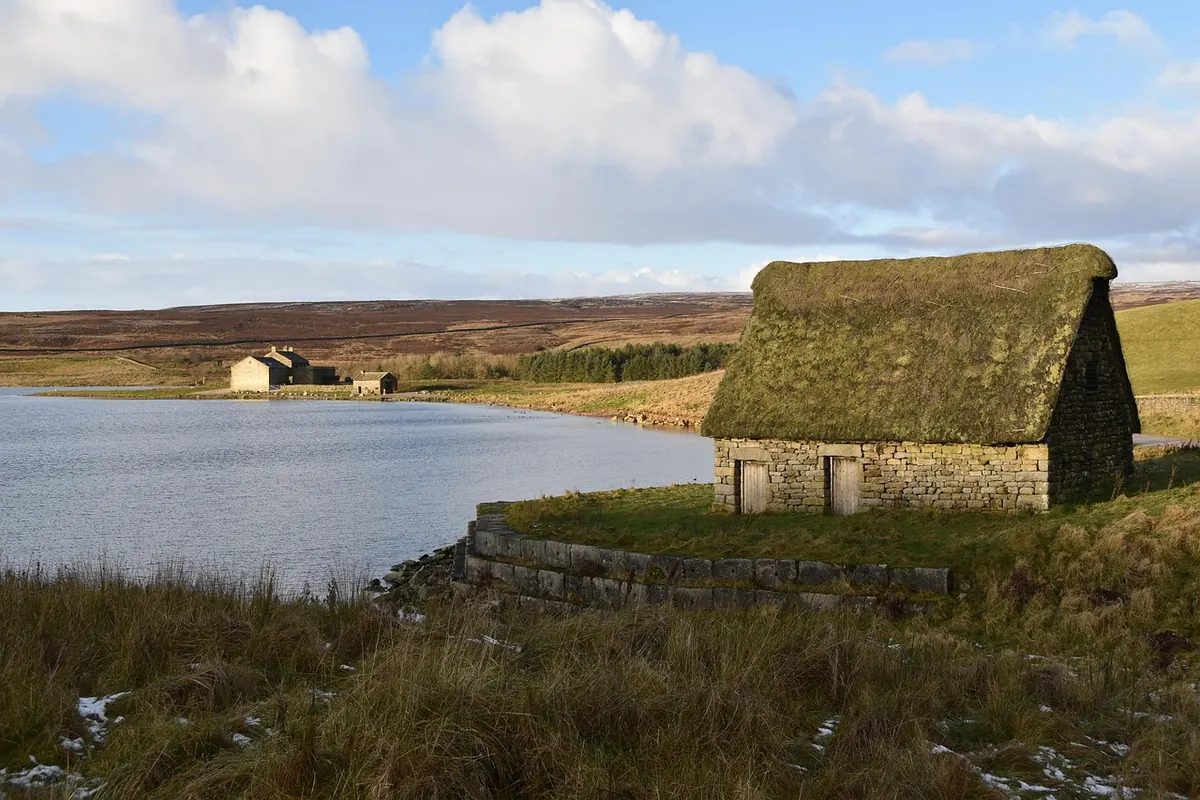
Photo: Northern_Punkie / Pixabay

A cozy nest for stories and imagination..
Copyright © 2026 Tale Nest. All rights reserved. Tale Nest.