October 08, 2026


A bedtime tale is a story with a job to do. Many wonderful children's books are built for daylight: they crackle with jokes, cliffhangers and characters who shout. Read one of those at seven in the evening and you may find a small person wide awake and asking urgent questions about dragons.
A bedtime tale works differently. Its shape, its pace and often its vocabulary are chosen to help a child put the day down. Plot matters less than the feeling the story leaves behind: safe, unhurried, softly finished.
Any story can be read at bedtime, but a bedtime tale is written for the ending rather than the twist. The problem inside it is small and domestic — a lost boot, a bear who cannot settle, a star that refuses to stay in one place. Three qualities mark it out:
That last quality is the one to protect. A cliffhanger at half past seven gives a child something to hold on to just when they are trying to let go.
Prose for bedtime sits closer to a lullaby than to a chapter book. Short sentences. Repeated sentence shapes. A refrain that returns three or four times, each time a little softer. Borrow a line like this and use it as a chorus:
And the moon kept watch, and the house grew still.
By the fourth appearance, the child knows what is coming. That knowing is what lets the shoulders drop.
Read any new bedtime story aloud once, on your own. If you run out of breath mid-sentence, or trip over invented names, the story will fight you at seven in the evening when you are tired. Look for text you can slow down without it falling apart.
On the night, drop your pace and your volume on the final page rather than your pitch. A true whisper is hard to hear and strains the voice; a slower, lower, ordinary voice does the job better. Resist hurrying the ending just because you can see sleep arriving.
Warmth is not the same as sweetness. It is the emotional temperature of a story, and children read it in seconds. They notice whether the small creature is looked after when it cries, whether the grown-ups are kind, whether anyone is left out in the cold.
Your own warmth counts too. The same words read with a sigh become a different story. Five unhurried minutes beat fifteen impatient ones.
Repetition is not laziness; it is engineering. When a child hears a story they already know, their brain stops scanning for what happens next. There is nothing to brace for. Attention softens, breathing slows, and sleep comes closer.
It also gives them a role. A repeated refrain invites them to join in, and joining in asks less of them each time round. Plenty of children fall asleep mid-refrain. Cumulative tales, where each new character is added to the last, work particularly well because the pattern carries the listener without demanding anything new.
This is why the tenth request for the same book is not a failure of imagination on anyone's part. It is the mechanism working. If you need variety for your own sake, change one detail and keep the rest: a different animal in the same story, a new hat, the same refrain.
If you are making one up, or adapting something that is nearly right, this structure will carry you a long way:
A bedtime tale usually runs two to eight minutes. On hard nights, take the lower end: a short story told calmly beats a long one told through gritted teeth.
You do not need a library of new stories. You need three or four that work, and the willingness to repeat them. Keep the cast small and the geography simple —
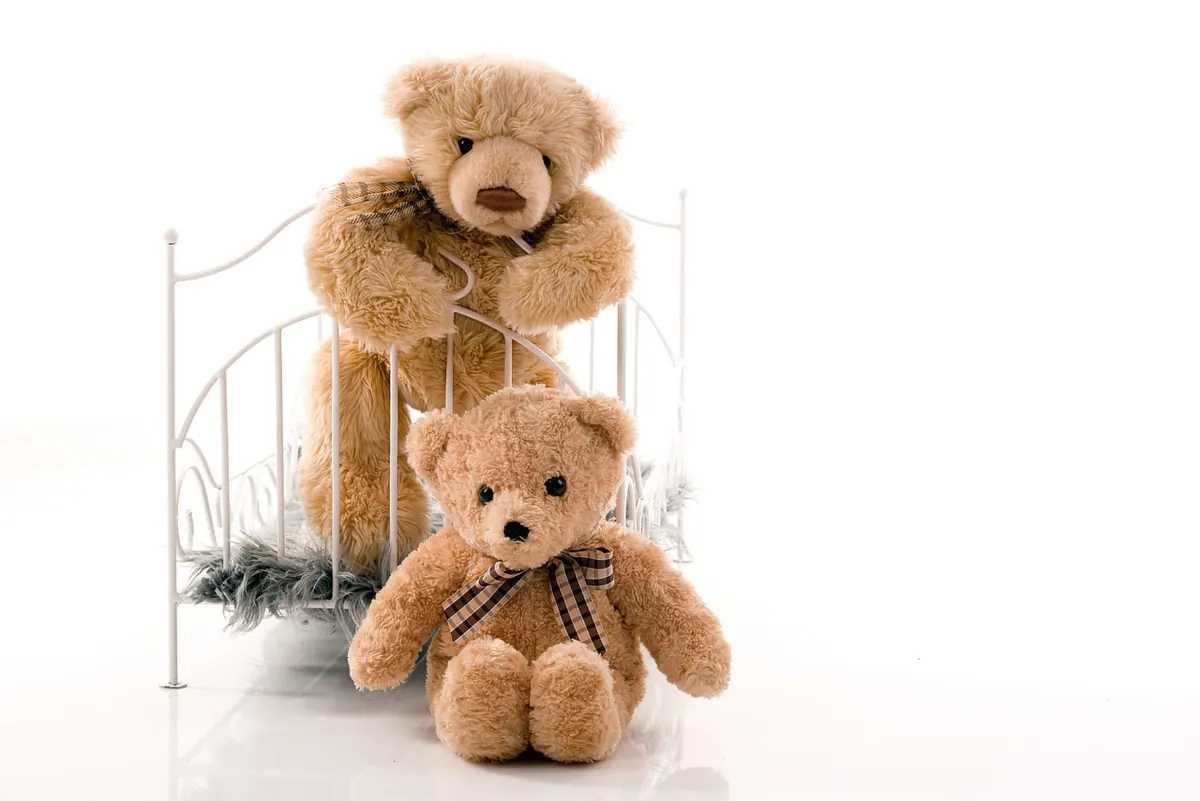
Photo: ParentiPacek / Pixabay

A cozy nest for stories and imagination..
Copyright © 2026 Tale Nest. All rights reserved. Tale Nest.